After installing new wet/dry feeders, production managers often ask: How do we calibrate our settings to ensure maximum Feed Conversion Ratio (FCR) and Average Daily Gain (ADG)?
The answer lies in understanding a fundamental operational principle: Managing a wet/dry feeder requires managing water delivery first.
When operators observe too much or too little feed in a trough, the instinct is often to adjust the feed shelf. However, on a wet/dry system, misdiagnosing the root cause and adjusting feed flow before verifying water flow creates a cycle of reduced intake, feed spoilage, and wasted labor.
Step 1: Regulate In-Feeder Water Flow
Water flow rate is the foundational control point of wet/dry management. Incorrect flow rates alter trough slurry consistency and trigger behavioral changes in the herd:
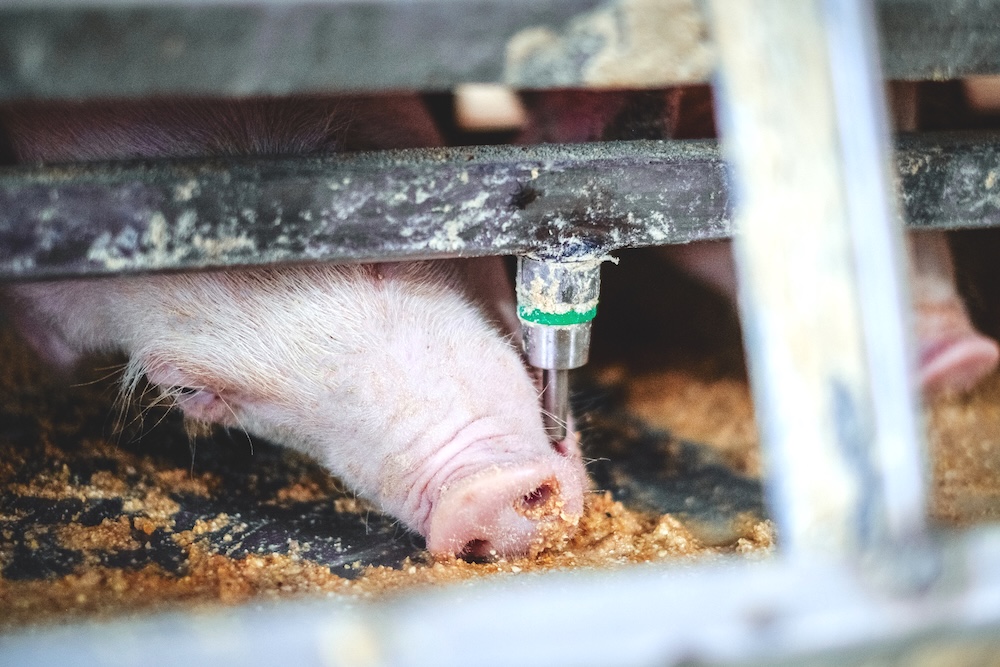
- Excessive Water Flow (Flooding & Spoilage): If nipple drinker pressure is too high, the trough becomes over-saturated. To achieve a palatable slurry consistency, pigs continuously agitate the feed drop mechanism to rake down more dry feed. This creates excess pan accumulation, leading to feed degradation, unpalatable spoilage, and degraded FCR.
- Moisture Wicking & Shelf Bridging: High water pressure combined with frequent snout contact causes moisture to transfer up onto the feed shelf via capillary action. Damp feed cakes on the shelf, causing bridging and blocking feed delivery.
- Suppressed ADG: When bridging occurs, the trough runs dry. Barn staff noticing an empty trough may mistakenly widen the feed shelf opening, compounding the problem once the bridge clears and flooding the pan with excess dry feed.
To eliminate water line pressure fluctuations and maintain consistent flow rates across varying pig ages, Crystal Spring engineered Adaptive-Flow™ nipple technology. These internal regulators automatically maintain optimal flow rates regardless of barn water pressure variations, keeping trough slurry at ideal consistency.
Step 2: Calibrate Feed Flow with Precision
Once water flow is calibrated to match the growth stage of the herd, adjusting feed delivery becomes straightforward.
Different ration physical forms—such as coarse mash, high-fat diets, or pelleted feeds—exhibit varying flow characteristics. Utilizing precision shelf control allows barn managers to fine-tune shelf clearance to achieve the optimal target of less than 50% trough coverage.
Crystal Spring feeders feature the patented EZ-Adjust™ system, providing repeatable, high-precision shelf adjustments that prevent over-processing by barn staff while maintaining steady feed intake.
Simple Management, Maximum Return
Maximizing the performance of your wet/dry feeding infrastructure doesn't require complex trial-and-error adjustments. By securing water flow first and calibrating feed delivery second, operators maintain clean troughs, maximize voluntary intake, and protect feed investment.
Need recommended water flow specifications by pig weight class or technical support for your barn? Contact the Crystal Spring technical team at info@cshe.com, via WhatsApp/Phone at +1 (402) 227-8228, or visit www.crystalspring.com to connect with your regional specialist.