Lactation is the most metabolically demanding phase in a sow's reproductive cycle. Achieving maximum Average Daily Feed Intake (ADFI) during farrowing is critical to supporting heavy litter weaning weights, reducing sow weight loss, and ensuring a fast Return to Estrus (RTE) with high subsequent ovulation rates.
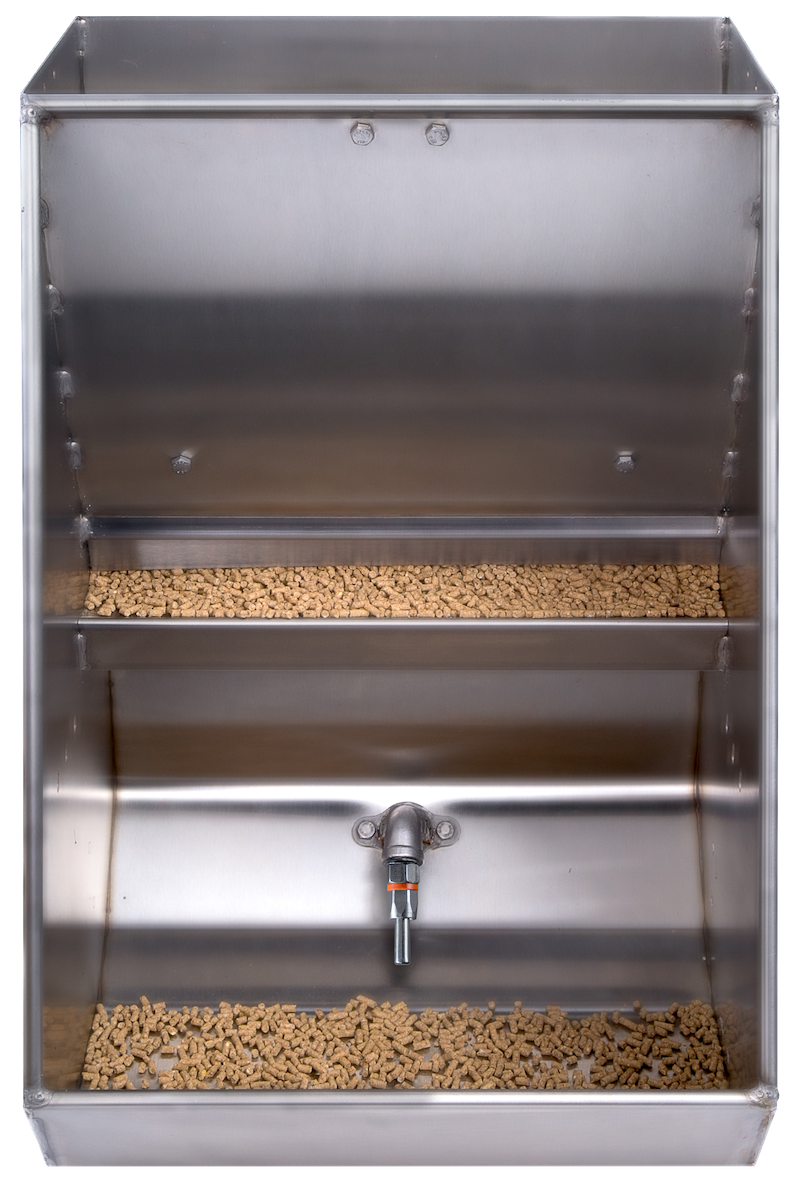
To address this challenge in farrowing rooms, Crystal Spring adapted the proven core design of our finishing feeders—including our feed shelf, patented EZ-Adjust™ system, and Adaptive-Flow™ drinker nipples—into our S2-Series farrowing feeders.
While the S2 line has been a mainstay in farrowing facilities for nearly two decades, foundational research conducted by Fast Genetics provides clear, head-to-head performance data demonstrating how ad-libitum wet/dry feeding superiorly maintains sow body condition compared to dry feeding systems.
Trial Overview: S2 Wet/Dry vs. S2-D Dry Feeding
The Fast Genetics trial compared two identical feeder bodies in a controlled farrowing environment:
- S2 Wet/Dry Feeder: Drinker nipple located directly inside the feeder bowl over the trough.
- S2-D Dry Feeder: Same feeder shelf and feed control mechanism, but with the drinker nipple mounted outside the feeder body.
Trial Demographics & Baseline Metrics
| Metric | S2 Wet/Dry Feeder | S2-D Dry Feeder |
| Number of Sows | 161 | 166 |
| Average Parity | 2.56 | 2.50 |
| Total Born / Litter | 14.47 | 14.62 |
| Born Alive / Litter | 13.24 | 13.64 |
| Stillborns (%) | 5.90% | 4.19% |
| Mummies (%) | 2.56% | 2.47% |
| Avg Piglet Birth Weight | 1.45 kg (3.20 lbs) | 1.48 kg (3.26 lbs) |
| Cross-Fostered Litter Size | 12.55 | 12.61 |
| Weaning Age | 21.37 days | 20.84 days |
| Pre-Weaning Mortality | 15.03% | 16.61% |
Statistically Significant Results (p<0.05)
Integrating water directly into the feeder shelf yielded immediate, statistically significant improvements in daily feed intake, water conservation, and body condition retention:
| Performance Metric | S2 Wet/Dry | S2-D Dry | Production Impact |
| Daily Feed Intake (ADFI) | 6.44 kg (14.19 lbs) | 5.83 kg (12.87 lbs) | +1.32 lbs/day (+10.2%) increased feed consumption |
| Daily Feed Usage (Total) | 6.51 kg (14.33 lbs) | 5.86 kg (12.93 lbs) | Higher total delivery driven by increased intake |
| Daily Feed Wastage | 0.06 kg (0.14 lbs) | 0.03 kg (0.06 lbs) | Minimal wastage across both treatment groups |
| Daily Water Disappearance | 18.2 L (4.81 gal) | 24.6 L (6.50 gal) | -26.0% lower water disappearance with internal nipple |
| Lactation Backfat Loss | 2.62 mm (0.10 in) | 3.23 mm (0.13 in) | -18.9% reduction in backfat loss |
Cumulative Production Impact
Beyond the statistically significant primary metrics, the increase in daily feed intake drove improvements across overall sow weight retention and litter performance:
- Lower Total Sow Weight Loss: Sows on S2 Wet/Dry feeders lost less overall body weight during lactation (9.4 kg / 20.7 lbs) compared to sows on dry feeders (10.57 kg / 23.3 lbs).
- Heavier Litter Weaning Weights: Increased nutrient intake directly supported milk production, yielding higher 21-day litter weights (68.21 kg / 150.86 lbs for S2 vs. 66.18 kg / 145.9 lbs for S2-D).
- Higher Weaned Pig Output: S2 wet/dry crates averaged 11.55 pigs weaned per litter vs. 11.35 pigs on dry feeders.
Practical Implications for Modern Farrowing Rooms
Maintaining sow body condition during lactation isn't just about the current litter—it dictates subsequent parity performance, Wean-to-First-Service Interval (WSI), and long-term sow retention in the herd.
By allowing sows to blend feed and water at the trough, the S2 Wet/Dry feeder drives higher daily feed intake while simultaneously slashing water wastage into the pit by 26%. The outcome is heavier pigs at wean, better-conditioned sows returning to the breeding line, and reduced pit pumping volume across the facility.
Want to know more about how our product line can help you get the best performance in the nursery phase? Contact our team at info@cshe.com, WhatsApp/Phone +1 (402) 227-8228 or use our dealer locator tool to find your local authorized dealer.