Sustainability isn't just a corporate buzzword for today's pork producers—it’s a bottom-line necessity. Consumers increasingly want to know that the protein on their plates is produced efficiently, minimizing resource consumption like water without compromising animal welfare or growth performance.
That producer reality drove our recent research partnership with Pipestone Applied Research (PAR): quantifying exact water usage differences between wet/dry feeders and traditional dry feeders.
The Benchmark: Looking Beyond Legacy Data
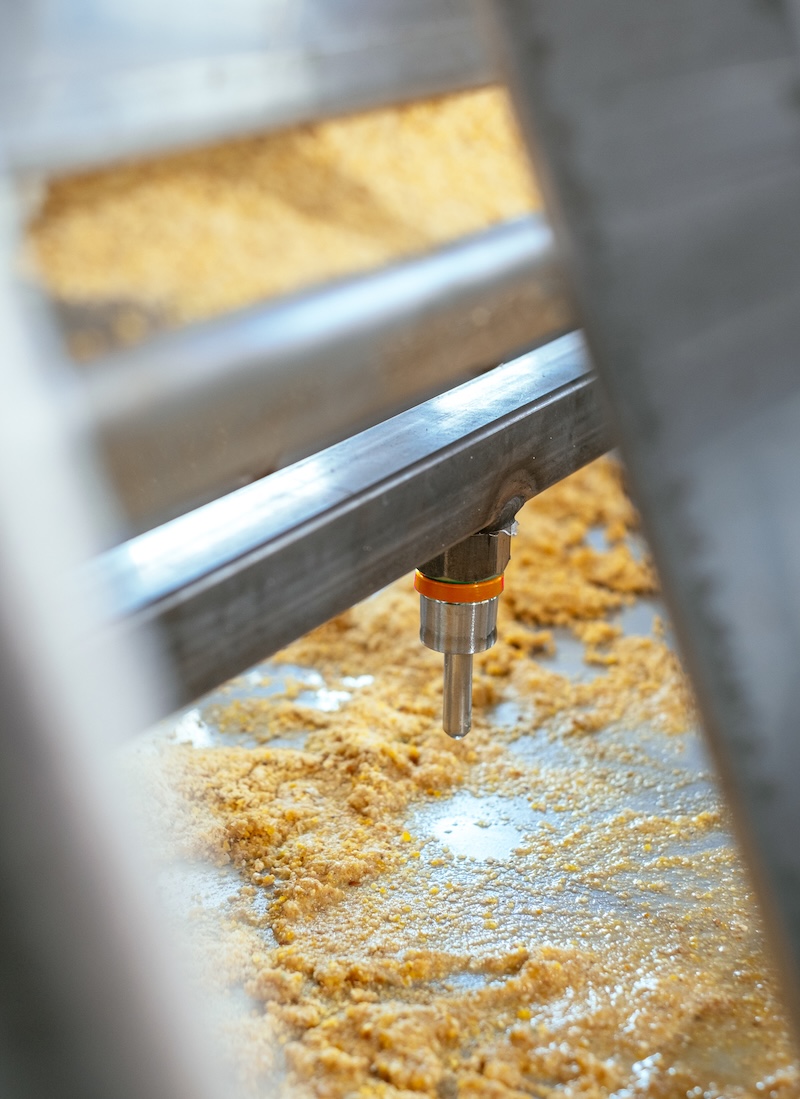
Decades-old industry studies—including our own work (Wastell, 2002) and research from Kansas State University (Rantanen et al., 1994)—established that wet/dry feeders reduce water disappearance by roughly 35% to 38% compared to dry feeders with supplemental nipple drinkers.
However, hog facilities, genetics, and feeding dynamics have evolved significantly since the turn of the century. We needed updated performance data reflecting modern finishing barn conditions, particularly following the widespread adoption of our Adaptive-Flow™ drinker nipple technology.
What the PAR Research Proves
Adaptive-Flow™ nipples were engineered to solve a persistent variable-pressure problem in modern barns, automatically regulating water delivery to ensure consistent flow at the trough regardless of line pressure fluctuations.
The results from Pipestone Applied Research delivered a clear verdict: wet/dry feeders featuring Adaptive-Flow™ technology reduced water disappearance by an impressive 53.4% compared to traditional dry feeding systems.
Put simply: our wet/dry systems use less than half the water of conventional setups, achieving these massive savings while maintaining optimal Average Daily Gain (ADG) and Feed Conversion Ratio (FCR).
The Downstream Impact on Barn Management
Cutting water disappearance in half changes the entire operational math for a finishing site:
- Manure Management: Lower water volume directly reduces total slurry volume, easing hauling requirements for deep-pit systems and lowering storage demands for lagoon-based operations.
- Nutrient Concentration: Less excess water means a more nutrient-dense slurry, making land application more efficient for corn and crop rotations.
- Facility Labor: Less spillage means drier pen floors, reduced waste feed spoilage in the pit, and improved overall pen hygiene.
Rooted in Stewardship
For Crystal Spring, resource stewardship isn't a marketing angle—it's part of our DNA, tracing back to our roots in the Hutterite colony of Ste. Agathe, Manitoba. Solving everyday production challenges through smarter engineering is how we help pork producers worldwide raise healthy pigs while protecting our natural resources for generations to come.
Start writing here...